The Scene Nobody Else Loved: Anatomy of Anton Park's Excessive Cut
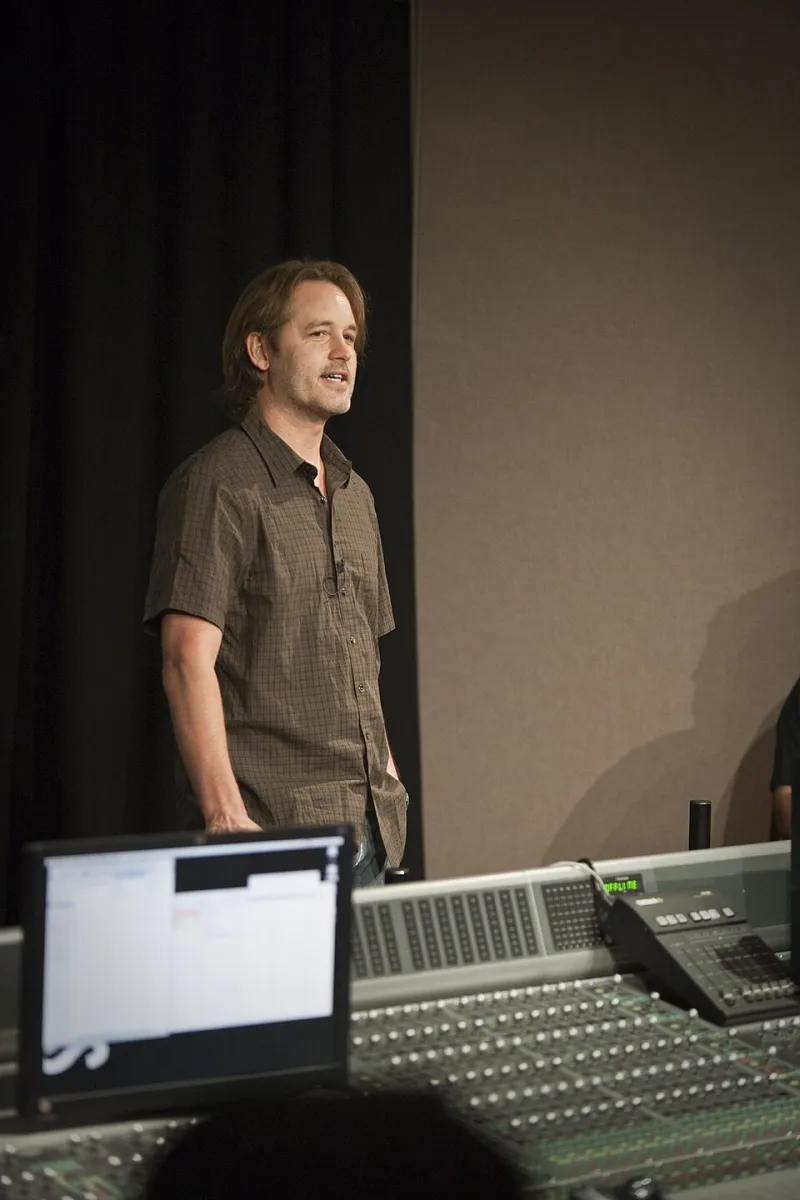
Photo: Vancouver Film School, CC BY 2.0, via Wikimedia Commons
There is a version of Anton Park's latest short film — the festival-bound Salt Flats, Nebraska — that runs nineteen minutes longer than the one audiences will ever see. It exists on a drive in the Los Angeles editing suite of editor Mara Ellison, and by Park's own admission, it is the most honest thing he has ever made. Not the most accomplished. Not the most disciplined. The most honest.
In an industry that rewards restraint, the excessive cut remains cinema's most private confession. Every director has one: a scene, a shot, a slow push-in that nobody else in the room defends, held on life support by nothing more than the director's stubborn love. This spring, Park and Ellison agreed to walk me through the moment that love was finally severed — and what it revealed about the filmmaker underneath the finished frame.
The Scene That Would Not Die
The scene in question runs four minutes and eleven seconds. It features a retired mail carrier, played by character actor Dean Okafor, washing a single coffee cup at a kitchen sink while a radio broadcasts a minor league baseball game from a station in Kearney. Nothing happens. No dialogue. No narrative function. The film's actual plot moves forward without it entirely.
"I screened the excessive cut for three people I trust," Park told me, "and all three of them said the same thing, in three different ways, which is what directors call consensus and editors call a verdict."
Ellison is more direct. "Anton would come in and say, 'Just watch it one more time.' That's the language of a man negotiating with himself. By the fifth week, I stopped arguing and started logging. I kept a record of every time we watched that sink scene and what he said after. It read like a diary."
Her notes, which she shared, chart a slow capitulation: Week two — 'It establishes the water motif.' Week four — 'It establishes patience.' Week six — silence, then: 'Cut it.'
What the Discarded Footage Knows
The conventional wisdom in American cutting rooms, inherited from the studio system and reinforced by every screenwriting manual sold at the Writers Store in Burbank, is that indulgence is a flaw to be managed. But spend time with discarded scenes and a different truth emerges: the excessive cut is often the most autobiographical material a director produces.
Park's sink scene was filmed in the actual kitchen of his grandmother's house outside Grand Island, in a house he had not entered in eleven years. The radio broadcast was recorded from a real game. The coffee cup belonged to his grandmother. "I wasn't directing a scene," he admitted. "I was visiting a memory and charging the production for the privilege."
This is the pattern that recurs across American independent cinema when directors speak candidly. The scene that runs too long is rarely a failure of craft. It is a failure of distance — the moment when the filmmaker stops serving the audience and starts serving something private. Steven Spielberg reportedly fought to keep the extended Shelbyville sequence in early cuts of his 1980s work. Paul Thomas Anderson has spoken about scenes he loved that no screening survived. The finished film is the argument the director makes in public. The excessive cut is what they believe when no one is watching.
The Confession Booth Has a Chair for the Editor
Ellison describes her role in unusually pastoral terms. "People think editors cut. Mostly we listen. A director will tell you everything about themselves over six months of dailies if you let them talk. My job on the sink scene was to keep asking, 'What is this doing for the film?' until Anton heard his own answer."
The final cut of Salt Flats, Nebraska now contains a two-second shot of the same sink, empty. Audiences at its upcoming festival premiere will never know the four minutes that preceded it. But Park has not deleted the footage. It sits in what his production team jokingly calls the confession folder — a directory of scenes too personal to screen and too true to discard.
"Someday I'll put it on a Criterion extra or a museum loop," Park said. "And some grad student will write that it's the best thing I ever made. They'll be wrong. But they'll be wrong in an interesting way."
What Directors Should Ask of Their Weakest Scene
For filmmakers reading this — the ones currently defending a scene nobody else believes in — Park offers no comfort and one question: Is this scene for the audience, or is it for someone who is gone? If the answer is the latter, he says, the scene may still belong in the film. But it must earn its place as grief, not decoration, and it must be shorter than your love for it.
Ellison puts it more simply. "The best directors I've worked with all have one thing in common. They let me kill their favorite thing, and then they thank me. The worst ones thank me too. But you can hear the difference."
The excessive cut will screen exactly once — at Park's annual private screening for the crew, scheduled for a Sunday evening in December, after the festival circuit has gone quiet. Nineteen extra minutes. One sink. Four minutes and eleven seconds of a man washing a cup while the game plays on. Some confessions, it turns out, are only meant for the people who were there when they were made.