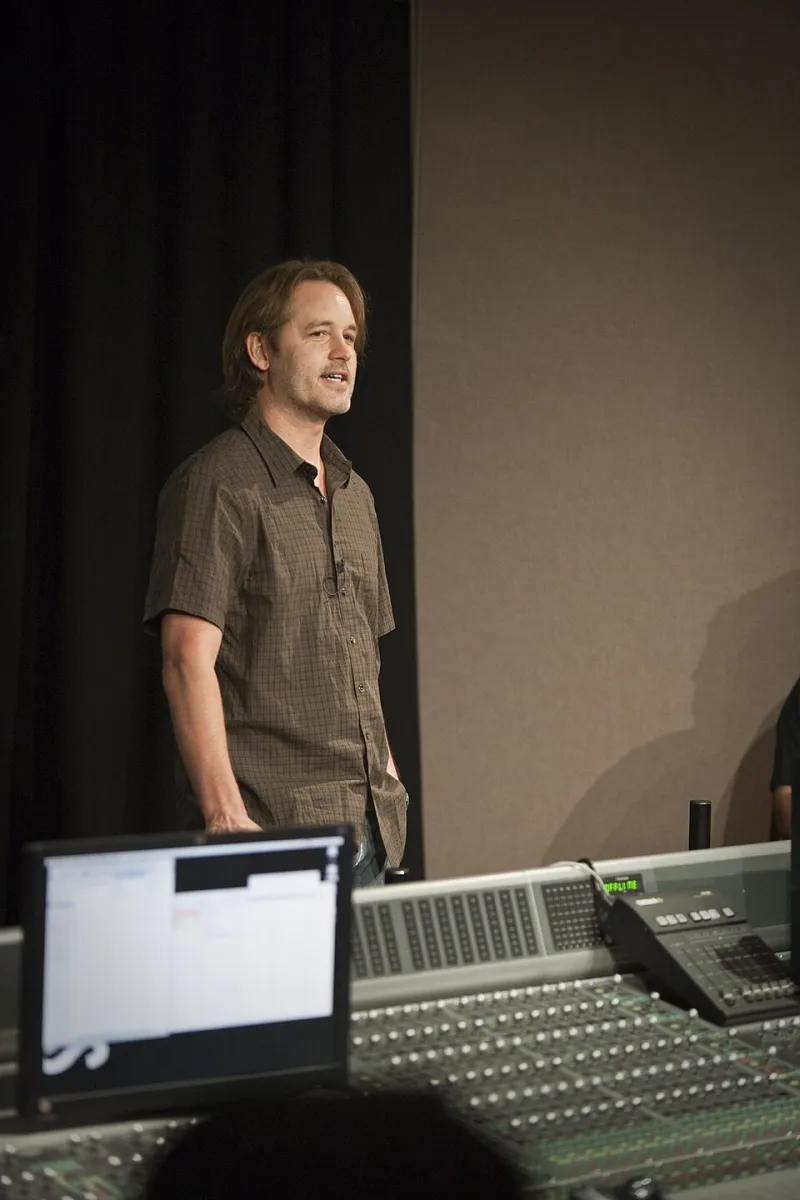
The General of the Call Sheet: Why Anton Park Never Boards a Set Without His First AD
Photo: Unknown authorUnknown author, CC BY-SA 4.0, via Wikimedia Commons
There is a moment on every production, usually around hour ten, when the director loses the ability to speak in complete sentences. The light is dying, the location manager is on the phone with a neighbor, and the lead actor wants to know why the scene changed. In that moment, the most important person on set is not the person holding the camera. It is the person holding the radio.
The first assistant director is the least glamorous job in American filmmaking and arguably the most essential. On my sets, the AD is the difference between a finished film and a folder of apology emails to investors.
The Translator
A director speaks in moods. "Make it lonelier," I have said, more than once, to a crew of forty people who have no idea what that means for the lighting budget. The first AD is the translator who converts that fog into something a production can execute: a schedule, a shot order, a decision about which scene dies today so the film can live tomorrow.
My longtime collaborator Dana Reyes, who ran set on three of my shorts, used to describe her job as "being fluent in two languages — the director's nonsense and the crew's reality." She never once raised her voice. She never once let me have the last word on the schedule. Both of those facts saved my career.
The Quiet Authority
What surprises people outside the industry is that the first AD has almost no creative authority and near-total practical authority. They do not choose the lens. They choose whether the lens gets used today or in two days when the sun cooperates. On a one-night sunrise shoot I directed outside Marfa, Texas, our AD moved the entire company twice in ninety minutes based on a weather app I never looked at. The film opens on a shot that would not exist without that call.
Good ADs wield this power gently. The best ones make the crew feel like the schedule was everyone's idea.
War Stories, Anonymized
Every working director has an AD story. Mine involves a location that fell through at 9 p.m. the night before a 6 a.m. call in a Chicago winter. Our first AD had a backup house scouted — a cousin's place, apparently — before I finished explaining the problem. We shot the next morning. I did not learn how close we came to collapse until months later, at the wrap party, over drinks the AD refused to let me pay for.
That is the pattern. The AD absorbs the crisis quietly, then lets the director keep the illusion of control. It is a professional kindness I have never fully repaid.
Advice for the Young Filmmaker
If you are starting out in the American independent scene, take the AD track seriously. Festival culture celebrates the writer-director, but the people who get hired repeatedly — the ones who build actual careers — are the ones who can run a set. Learn call sheets the way you learned shot lists. Study the DGA training program if you want the formal route; if you don't, work on student films in your nearest film hub and volunteer for the scheduling jobs nobody wants.
Three things I have watched great ADs do consistently:
- Protect the company, not the ego. Including the director's, especially the director's.
- Decide before the crisis. A backup plan drafted at lunch is worth ten decisions made in a panic at dusk.
- Know where everything is. Batteries, actors, the insurance certificate, the answer.
That last one sounds small. It is not. A set is a machine for burning daylight, and the first AD is the only person who knows where every gear in the machine is at all times. When people ask me what a director actually does, I give the honest answer: I dream, and someone else makes the dream arrive on time.
This one is for them.