Reading the Sky Before the Slate: Anton Park's Doctrine of the Uninterrupted Shoot Day
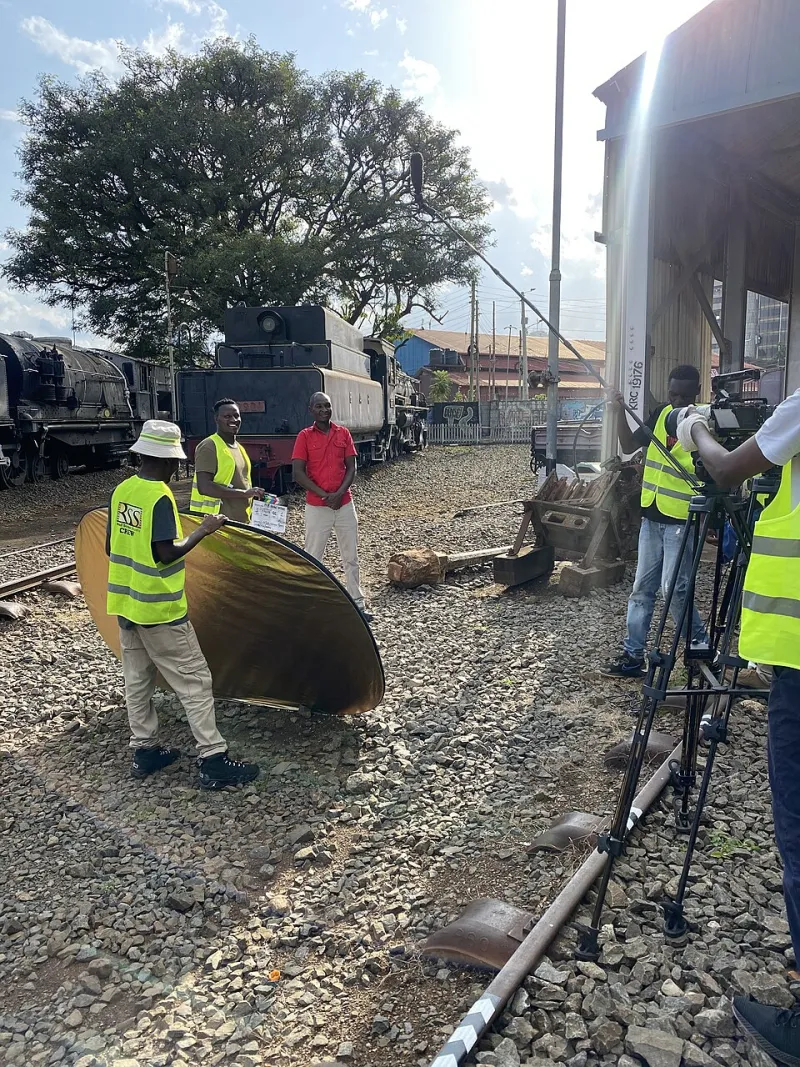
Photo: Cecimercy Wanza(Ceci), CC0, via Wikimedia Commons
The Forecast Is a Draft, Not a Verdict
There is a laminated card taped inside every camera truck Anton Park's productions rent. It reads, in his own handwriting: The forecast is a draft. Crew members who have worked with him more than once treat the card less like decoration and more like scripture. It signals the operating philosophy of one of American independent cinema's most disciplined production minds: weather does not stop the day. Weather reshapes it.
Park does not reschedule. This is not bravado; it is arithmetic. A micro-budget production loses roughly $8,000 to $15,000 for every idle day once cast, crew, locations, and equipment are locked. Rescheduling a single exterior day can push a whole schedule into overtime premiums and location re-clearances. Park's answer, refined over a decade of shoots from the Hudson Valley to the high desert outside Santa Fe, is to build the storm into the plan rather than wait it out.
Writing for the Rain: The Script as Contingency Document
Park's screenplays contain something most do not: a weather architecture. Every exterior scene is written with a designated interior twin — a scene that can be shot in a covered or indoor location on short notice without disrupting continuity. These pairs are mapped during pre-production and color-coded on the schedule that the assistant director distributes each night.
The logic is deceptively simple. If scene 14 — a two-character conversation on a fire escape — becomes unshootable, the production pivots to scene 27, a kitchen-table exchange between the same characters that was always intended for later in the film. The story doesn't suffer; the order of photography simply bends. Park has described this in a production memo as "writing the movie twice, once in sunlight and once in shelter."
What makes the system work is that the twin scenes are written to share emotional register. Park's dialogue in these paired scenes is deliberately interchangeable in tone, so a viewer never senses that the sequence was photographed weeks out of order on a day the sky collapsed.
Hour by Hour: Anatomy of a Storm Day
To understand the doctrine in practice, consider a composite day drawn from Park's most recent short film, shot outside Beacon, New York, in late October.
6:00 a.m. The weather call comes three hours before crew call. Radar shows a squall line arriving around noon. The first assistant director triggers what the crew calls Plan B — not a delay, but a swap. The morning's exterior farmer's-market scene holds; the radar gives them a four-hour window, and the schedule front-loads the two most weather-dependent setups.
6:30 a.m. Grip electric begins staging what the team calls the umbrella grid: a portable 20-by-20 rain cover rigged over the market's central aisle, with sump lines running to drainage. The goal is not to pretend the rain isn't coming — it is to buy twenty extra minutes of usable light if the front arrives early.
9:15 a.m. First setup is in the can. Park moves the company to a covered porch location, one of three pre-scouted fallback positions within a ten-minute company move. The porch scene, written as an alternate for exactly this scenario, requires no permits and no new parking.
11:50 a.m. The rain arrives on schedule. The crew has already wrapped the exteriors. The afternoon belongs to the interior twin scenes, lit through windows that the cinematographer has been quietly hoping would turn gray all week. Overcast skies, Park notes, are the cheapest diffusion money cannot buy.
4:30 p.m. With the storm passing, the AD polls the sky. A fifty-minute window of post-rain light opens — wet pavement, silver reflections, the exact texture Park had wanted for a transitional walking shot no one expected to get. The day ends ahead of schedule.
The Human Machinery of Flexibility
None of this functions without people who have rehearsed uncertainty. Park's department heads attend a weather rehearsal — a tabletop walkthrough of the swap scenarios — during the production week before principal photography. Every key crew member knows which scenes are twins, which locations are fallbacks, and who owns the decision to pull the trigger.
Park is explicit about one thing: the director decides, but only once. Endless deliberation during a weather event is more expensive than the wrong choice. His rule, relayed to every new crew member at the safety meeting, is that the call gets made at the weather call, and the day proceeds as decided.
A Checklist to Steal
For filmmakers shooting on their own dime, Park's system compresses into a page:
- Pair every exterior scene with an interior twin before you lock the script
- Scout three covered fallback locations within a ten-minute drive of your exteriors
- Schedule weather-dependent scenes in the first half of the day, never last
- Pre-rig portable cover and drainage before the first setup, not during the storm
- Write dialogue in twin scenes to a shared emotional register so reshuffled order stays invisible
- Make the weather decision once, at the weather call, and commit
- Treat overcast as free diffusion and rain as free production design
Cinema in Every Frame, Rain Included
Park's films are often praised for their atmosphere — the humid shimmer of a summer street, the flat silver of a gray afternoon. What festival audiences rarely see is that this atmosphere is not luck. It is a production philosophy that treats the American sky not as an adversary but as a member of the ensemble, one whose scenes are written in advance and whose performance is welcomed whenever it chooses to arrive.
The forecast, as the laminated card reminds everyone who climbs into the truck, is a draft. The film, however, gets finished on schedule.