Beyond the Coasts: How Pittsburgh, Albuquerque, and Three Other American Cities Stole the Frame
For most of American film history, geography on screen has been remarkably narrow. Los Angeles supplied the glamour, New York the grit, and everything in between was largely asked to play itself as background. That monopoly is eroding. A generation of independent directors — along with the state incentive programs that court them — has redirected the camera toward cities that were never supposed to be stars.
What follows is not a ranking but a survey: five American cities that have stopped serving as stand ins and started acting.
Pittsburgh, Pennsylvania: The Beauty of What Remains
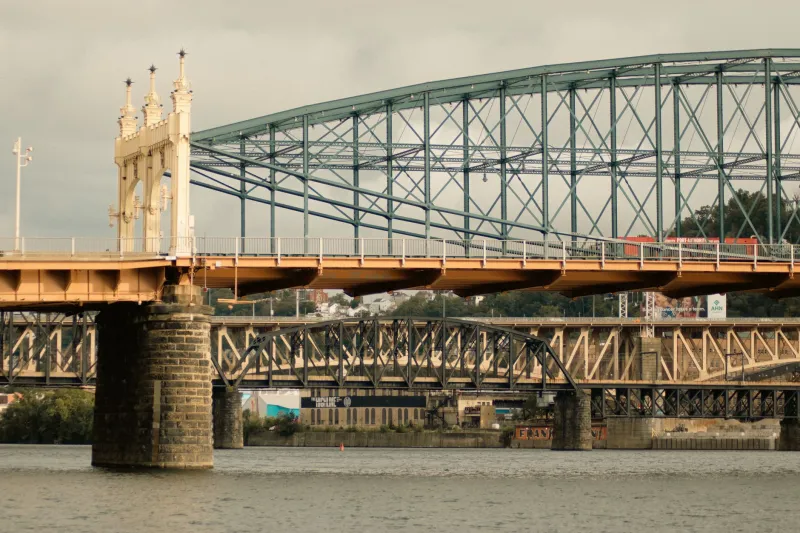
Few American cities photograph melancholy as well as Pittsburgh. The steel industry's departure left behind a landscape of bridges, inclines, and blast furnace silhouettes that filmmakers have learned to treat as emotional architecture rather than industrial ruin. Directors working there benefit from a seasoned local crew base — a legacy of the city's commercial and corporate production scene — and from the Pennsylvania film tax credit, which has steadily pulled mid budget productions into the western part of the state.
The visual signature is unmistakable: sodium vapor glow on wet asphalt, hills that stack neighborhoods into vertical compositions, rivers that fork the skyline into geometry. Pittsburgh doesn't need a director to give it mood. It arrives with one.
Albuquerque, New Mexico: The Tyranny of Light
If Pittsburgh is about texture, Albuquerque is about illumination. The high desert light of New Mexico — thin, hard, and relentlessly honest — has shaped an entire visual dialect, one that national audiences came to know through a certain celebrated Albuquerque set crime drama and its spinoffs. But the city's cinematic utility extends well past prestige television.
New Mexico's film incentive program is among the most robust in the country, and crucially, the state has invested in training local crews rather than importing them. The result is a production ecosystem where the light outside matches the professionalism inside the frame. The desert's flat horizons and dramatic skies compress emotional distance in a way no backlot can replicate.
Cleveland, Ohio: The Unsung Everycity
Cleveland has quietly served as itself, as Chicago, as Washington, and as any rust belt town a script requires — but its most interesting work happens when filmmakers let it be Cleveland. The city offers an unusual bundle: a walkable downtown, a lakefront that reads as ocean, grand neoclassical institutions, and neighborhoods whose architecture spans a century of American ambition.
Ohio's incentive structure and the city's cooperative film office have made it a pragmatic choice for productions that need versatility on a budget. What elevates it, though, is tonal range. Cleveland can play hope and decline in the same block, sometimes in the same frame.
Savannah, Georgia: The Gothic South
Savannah's oak canopies, antebellum squares, and fog off the river give it perhaps the most immediately recognizable atmosphere of any mid sized American city. Georgia's generous tax credit made Atlanta the industry's southern capital, but Savannah offers something Atlanta cannot: a preserved historic core that functions as a complete, walkable period set spanning the eighteenth century to the present.
Directors drawn to Southern Gothic, historical drama, or slow burning suspense keep returning to those moss draped squares. The city's visual character does half the storytelling before a line is spoken.
Kansas City, Missouri: Jazz, Brick, and Border Light
The most under-discussed entry on this list, Kansas City combines a fabled musical heritage with a stock of prewar brick architecture that photographs with remarkable warmth. Straddling two states, it offers two incentive systems and a crew pool accustomed to stretching resources with midwestern ingenuity.
Its cinematic identity is nostalgic without being precious — neon signs, jazz clubs, wide streets built for a car age that never entirely left. For filmmakers exploring memory, music, and middle America, the city provides a palette no coastal location can counterfeit.
The Character Behind the Camera
The common thread across all five cities is not scenery. It is infrastructure: crews who live there, incentives that make shoots feasible, and film offices that treat directors as neighbors rather than tourists. The visual texture draws filmmakers in; the local ecosystems keep them there.
For independent directors deciding where their next project lives, the lesson of the past decade is clear. The most cinematic character in your film might be a city nobody told you to shoot in.