The Meteorology Department of One: Why Anton Park Bets Every Production on the Sky
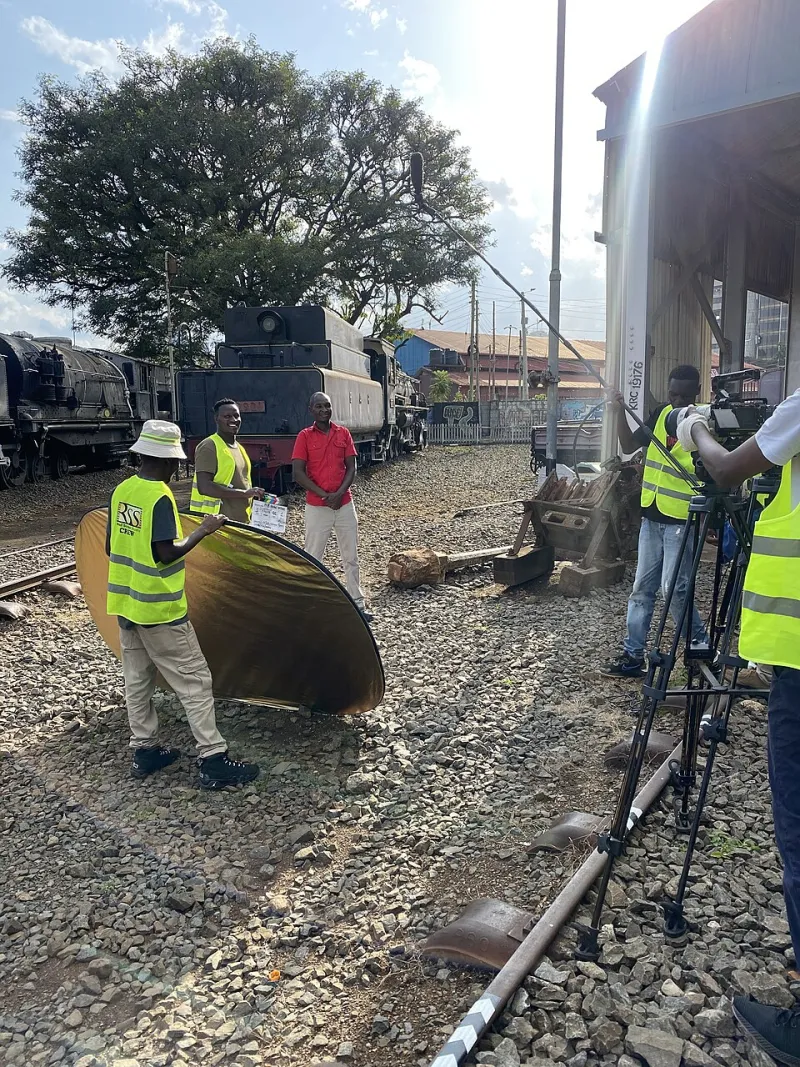
Photo: Cecimercy Wanza(Ceci), CC0, via Wikimedia Commons
On the call sheet for the third day of Anton Park's most recent short film, between the standard blocks for company moves and meal breaks, there is a line item most productions have never seen: fog window, 5:40–7:15 a.m., confidence 60%. If the fog doesn't come, the crew doesn't shoot. If it comes late, the crew waits. If it never comes at all, the schedule shifts and the production absorbs the cost.
This is how Park makes movies — by surrendering a measure of control that most directors spend their careers clawing back. His films are lit exclusively by whatever the atmosphere provides, and that single constraint shapes everything from his budgets to his geography to his sanity.
A Weather Consultant on the Crew List
Park's collaboration with meteorologists began as an act of desperation. During the production of an early short in coastal Maine, an unseasonable stretch of overcast mornings erased the light his storyboard depended on, and the shoot hemorrhaged four days. The lesson stuck: weather is not an obstacle to be endured but a variable to be forecast.
He now retains what he calls a "sky consultant" — a working meteorologist who builds him a climatological profile of each candidate location months before scouting begins. The report covers historical cloud cover by hour, fog frequency by season, the statistical reliability of golden hour, and the likelihood of rain events that could ground a schedule for a week. For a film set in the hill country outside Austin, the consultant identified a two-week window in late October when morning mist settles into the valleys with near-daily regularity. The entire shoot was compressed into that window.
The arrangement is unusual enough that festival programmers who have visited his sets describe them as half film set, half weather station. A laptop in the video village displays radar loops. The first assistant director speaks comfortably about dew points.
Scheduling Around the Sun, Not Against It
The practical consequence of Park's no-artificial-light rule is that his shooting days are short and strangely shaped. Without tungsten or LED rigs to extend the day, the usable window shrinks to the two hours after sunrise and the two before sunset — with a generous buffer for overcast conditions, which he often prefers anyway for their soft, sourceless quality.
A typical Park production shoots four to six hours a day. Crews wrap by mid-morning, then reconvene in the late afternoon. It is, by his own admission, an expensive way to make a film: the same payroll buys a fraction of the coverage. But Park argues the math is misleading. "You pay for the light either way," he has said. "You pay it in rental houses or you pay it in patience. Patience is cheaper, and it comes with better acting."
There is evidence for that last claim. Performers who have worked with him describe the enforced downtime as a kind of collective respiration — long waits that give scenes time to settle before the camera turns over.
The Gamble He Keeps Taking
Skeptics are not hard to find. Producers who have read Park's schedules describe them as actuarial documents, insurance policies written against the mood of the jet stream. One line producer, speaking generally about weather-dependent productions, put the risk plainly: a single stalled weather system can erase a week of a compressed schedule, and compressed schedules have no slack to give.
Park's response is structural rather than defensive. He writes scripts with fewer setups. He casts local, non-professional actors who live near the locations, so a lost day doesn't mean flying anyone home. He shoots in regions — the Pacific Northwest, the Appalachian hollows, the Gulf Coast in shoulder season — where atmospheric drama is frequent enough to be nearly reliable. And he builds every schedule with what he calls "surrender days": unscheduled blocks that exist only to be given away to the sky.
The gamble has, so far, paid off more often than it has failed. What the industry once read as eccentricity is increasingly read as method — a body of work in which no two films share a light source, because no two films share a sky.
Why He Won't Bend
The question he is asked most often, usually by film students, is the obvious one: why not cheat? A bounce board, a practical bulb, a single hidden LED — who would know?
Park's answer is less dogma than philosophy. Natural light is the only lighting instrument that is never entirely under the filmmaker's control, and that instability is, for him, the point. It forces the frame to admit the world rather than replace it. A scene shot in genuine rain carries the memory of the rain; a scene shot under artificial drizzle carries only the memory of the rig.
His next project, currently in pre-production, will track a single family across four seasons in rural Vermont — a structure that is, in essence, a weather diary with dialogue. The schedule allocates eight months. The script allocates no lighting budget at all.
Somewhere over New England, the forecast is already being written.