The Reading List Behind the Lens: Six Books That Explain Anton Park's Visual Grammar
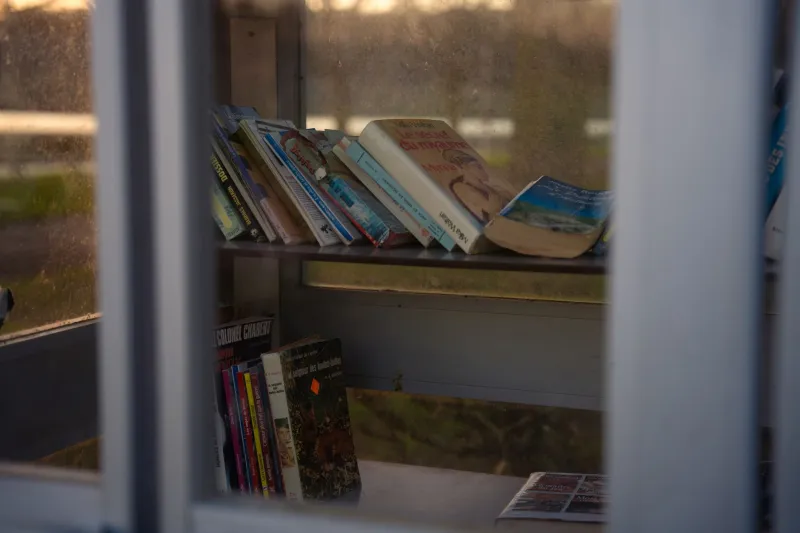
Visitors to Anton Park's Brooklyn editing suite tend to notice the same thing: the bookshelf is within arm's reach of the timeline. Not decorative. Park pulls volumes down mid-edit, the way other directors pull up reference clips.
"A book is a frame you hold in your hands," Park told this publication during a long conversation last fall. "When I'm stuck on a cut, I read a paragraph and I usually know what the shot wants."
What follows is the working list — the titles Park keeps on set, and the specific visual or structural fingerprints they've left on his films. Festival audiences who want to decode the work can do worse than read along.
1. So Long, See You Tomorrow — William Maxwell
The slimmest book on the shelf, and arguably the most influential. Maxwell's novella, structured around a rural Illinois tragedy told from shifting and unreliable vantage points, is the blueprint for Park's habit of restaging a single event from multiple perspectives — most visibly in his short County Line, where a roadside accident is replayed three times, each pass quieter than the last.
2. The Americans — Robert Frank
Park's cinematography leans heavily on Frank's 1958 photography collection: window reflections, gas stations at night, figures caught mid-turn with their faces half-lost. His recurring motif of characters framed through glass — car windshields, diner windows, shower doors — is a direct lift from Frank's visual logic. Several shots in Low Water are near-literal homages to plates in the book, which Park admits he keeps in the camera truck on every shoot.
3. Into the Silent Land — a working title he won't confirm
This one requires some decoding. Park has referred in interviews to "the gray book," and crew members describe a worn paperback of landscape essays he rereads before every location scout. Whatever its exact title, its influence shows: Park's exteriors are almost always filmed in the hour when color drains from the landscape, a choice that gives his American settings — Ohio cornfields, Jersey marshes, desert two-lanes — a distinctly elegiac register.
4. Story — Robert McKee
The surprise entry. Park is an art-house director with a structuralist streak, yet the most dog-eared spine on the shelf belongs to Hollywood's most famous screenwriting manual. "I disagree with most of it," Park laughs. "But I read it every year to know what I'm arguing with." His films' careful, almost classical act structures — beneath their experimental surfaces — suggest the argument is more productive than rebellious.
5. Gilead — Marilynne Robinson
Robinson's novel, a letter from a dying Iowa minister to his young son, gave Park the architecture for his long-take monologues: single sustained shots of a character speaking toward someone just off frame, often in voiceover-adjacent register. The influence is most explicit in Vespers, his nine-minute one-take short, which he has called "an attempt to film the last chapter of Gilead without the book."
6. A Walker in the City — Alfred Kazin
The newest addition. Kazin's memoir of walking through Brooklyn in the 1930s underpins Park's current project, a feature-length portrait of the borough shot entirely on foot over four seasons. Early production stills — brownstone stoops, elevated train shadows, a hand trailing along a fence — read like frames from Kazin's prose. "He taught me that a city is a memory you walk through," Park said. "That's the whole treatment."
A Watch-and-Read Guide
For audiences building a double feature: pair County Line with the Maxwell, Low Water with the Frank, and Vespers with the Robinson. Read the chapter, then watch the film — or the reverse. Either order, the point holds. Park's frames are not impenetrable; they're citations. And like all good citations, they're meant to be followed.