Mixing the Void: Inside the Deliberate Silences That Shape Anton Park's Soundtracks
Ask most festival audiences what they remember about an Anton Park short and they'll describe an image: a figure in a doorway, a highway at dusk, a kitchen lit like a Vermeer. Ask Park himself, and he'll talk about something else entirely.
"The frame gets all the credit," he said during a post-screening Q&A in Los Angeles last spring. "But half the tension in my work is built in the mix. Specifically, in what I take out of it."
Silence as a Structural Choice
Park's films are notable for their audio gaps — stretches of ten, twenty, even forty seconds where the score drops out, the foley recedes, and all that remains is the low hum of a room. It's a technique borrowed less from cinema than from American minimalism: the quiet passages of a Morton Feldman composition, or the long pauses in a Raymond Carver story where the subtext does the talking.
The effect is deliberate. Where many independent directors treat sound as a filler — laying music over anything that risks feeling slow — Park treats its absence as the event. The audience leans in. The room becomes a character with its own pulse.
Breaking Down 'Low Water'
The clearest case study is Park's 2023 short Low Water, a twelve-minute two-hander about estranged brothers meeting at a family lake house in upstate New York. Working with re-recording mixer Dana Okafor, Park built the film's soundscape in three distinct movements.
The Arrival (0:00–3:30). The film opens with nearly a minute of unbroken ambient bed: lake water, distant cicadas, the creak of a dock. No score. Okafor recorded room tone at the actual location over three days, layering takes from different weather conditions so the quiet never feels static. "A real room is never silent," Okafor explained. "Anton wants the audience to feel the texture of nothing."
The Kitchen (3:30–8:00). As the brothers circle each other in conversation, Park strips the dialogue mix down to almost dry recordings — no reverb, no sweetening. The compression of the room against the openness of the earlier lake ambience creates an unconscious sense of confinement. When one brother finally confesses a secret, Park cuts the ambient bed entirely for eleven seconds. Test audiences consistently described that moment as "the loudest part of the film." Nothing in it makes a sound.
The Departure (8:00–12:00). The final movement reintroduces the lake, but pitched slightly wrong — the water sounds are from an earlier, colder recording session. It's a detail almost nobody catches consciously. Almost everybody feels it.
Mixing 'the Room Tone' as a Character
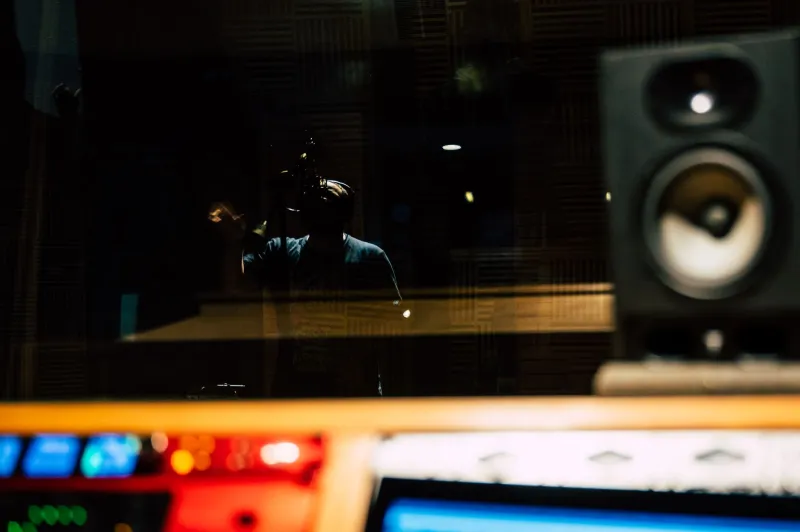
Park's collaborators describe an unusual workflow. Where most productions capture thirty seconds of room tone per location, Park's sound team records five full minutes at minimum, and the editorial team treats those files like coverage — selecting, cutting, and even reversing them in the edit.
"We storyboard the silences," Okafor said. "There's an actual column in the sound notes labeled 'voids.' Each one has a job. Some are for tension. Some are for grief. One in Low Water is just for letting the audience breathe before the last shot."
Sound designer Marcus Liu, who worked on Park's earlier shorts, puts it another way: "Anton will cut a line of dialogue to protect a silence. Most directors cut the silence to protect the line. That difference is basically his whole aesthetic."
Why It Works on an American Audience
There's a cultural dimension, too. American independent cinema has historically been loud — propulsive scores, dense soundscapes, dialogue that never stops moving. Against that backdrop, Park's quiet reads as a statement of confidence. Festival programmers have noted that his shorts hold restless theatrical audiences precisely because the silence demands attention rather than requesting it.
For Park, though, the reasoning stays simple. "Cinema is an act of listening," he said. "If I fill every second, you never get the chance."
Anton Park's shorts, including 'Low Water,' screen at festivals throughout the year. Production diaries and behind-the-scenes mixes are archived on this site.