It Takes a Village of Twenty: The Craftspeople Festival Coverage Keeps Forgetting
The Credit Crawl Nobody Reads
Watch the room at any American festival premiere — Sundance's New Frontier Lounge, a SXSW satellite screening, the shorts block at a regional festival in Ohio — and you'll notice a pattern. When the director is introduced, there is applause. When the cinematographer is named, polite nods. When the gaffer's name appears on screen during the credits, the room is already gathering coats.
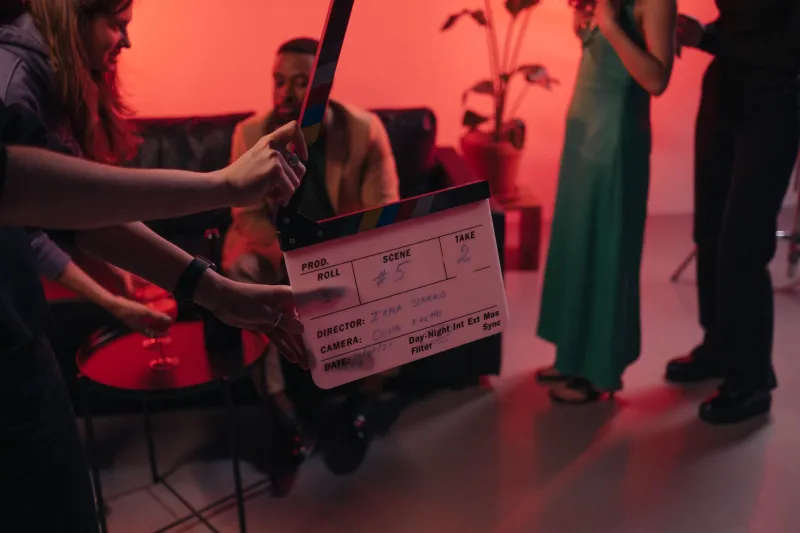
This is not malice; it is habit. Festival coverage, trade write-ups, and even programmer introductions default to auteur shorthand: a film by one person. But anyone who has stood on a working set knows the truth. A short film is a director's vision the way a cathedral is an architect's drawing — the vision survives only if a hundred hands can build it. It is time festival culture started naming those hands. Below, five roles that deserve the coverage they rarely get, each illustrated from Anton Park's own productions.
The Gaffer: The Person Who Invents the Sun
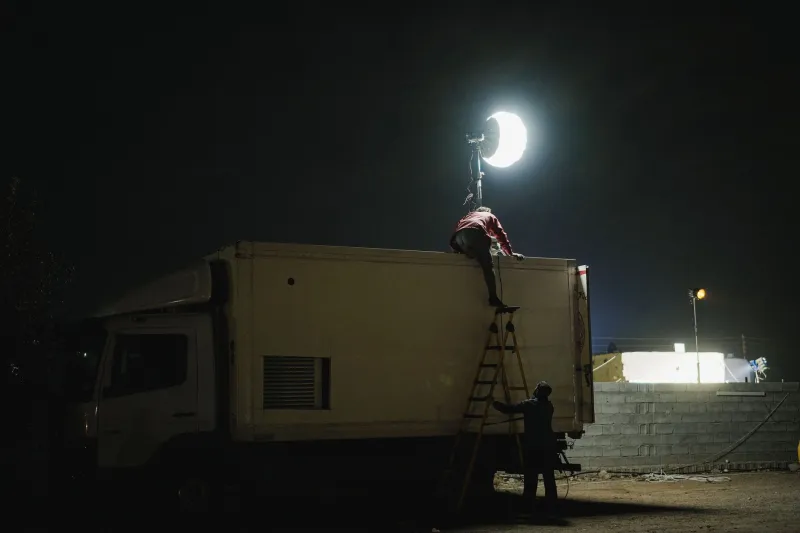
A cinematographer designs light; a gaffer makes it exist. On Park's short Night Bus to Harrisburg, the script demanded a moving dialogue scene lit only by passing highway sodium lamps — at night, on a rig, on a closed section of road with a hard four-hour window. The gaffer, Dee Alvarez, solved it by mounting a color-shifting LED source on a pickup truck that drove the same loop, on the same timing, for eleven takes, keeping the light's rhythm identical take after take.
No audience member noticed. That was the point. Reviewers praised the film's "documentary intimacy." The intimacy had a crew member's name on it.
The Boom Operator: Half Your Sound, Zero Your Attention
Indie audiences have learned to forgive soft focus; they will not forgive unintelligible dialogue. Yet the boom operator remains the most chronically under-covered craft in festival journalism. The job is equal parts athlete and diplomat: holding a nine-pound pole overhead for ten-minute takes (Park's long-take aesthetic makes this brutal), reading the blocking, anticipating the ad-lib, all while staying out of the frame edge by inches.
On Salt Flats, NY, the climactic kitchen argument was captured in one unbroken take with two actors crossing a small room. The boom operator choreographed the move like a dance — a crouched pass under the camera operator's arm at the ninety-second mark, then a slow rise to catch the final line. The take that made the film was take four. The pole work was flawless on all of them.
The Colorist: The Final Author
If Park's palette boards decide a film's mood in advance (and on his sets, they do), the colorist is the person who makes the promise come true in post. Working in the grade suite, they translate the director's watercolor intentions into actual pixels across hundreds of shots, balancing skin tones, matching cameras, and shaping the temperature arc that gives a film its emotional weather.
A great colorist is an uncredited co-author. When festival write-ups praise a short's "distinctive look," they are almost always praising forty hours of someone's grading suite work without knowing their name.
The 1st AD: The Director's Nervous System
The first assistant director does not direct — that is precisely why the role matters. The 1st AD converts a director's instincts into a schedule, a shooting order, and a set that stays safe, legal, and on time. On American indie sets, where every overtime hour eats the budget, a strong 1st AD is often the difference between finishing the film and abandoning it.
Park's 1st AD on his last three shorts, Marcus Oyelaran, is famous among the crew for one habit: he protects the director's most ambitious idea by sacrificing his own schedule for it. The twelve-minute single-take sequence that closed Night Bus to Harrisburg existed because Oyelaran restructured two shooting days to buy the time for it. He appears in exactly zero articles about the film.
The Production Designer: The World Before the Actors
Before an actor can give a performance, they need a place to stand — and the production designer has already decided what that place says. On Park's productions, the designer works from the same palette boards as the DP, building rooms where every object is an argument. The refrigerator magnets, the faded curtains, the specific wrongness of a lamp: all of it is authored.
Audiences experience this work as "atmosphere" or "authenticity." Programmers should experience it as a name worth printing.
The Case for Better Credits
The fix is simple and costs nothing. Festivals, print the full key crew in your program notes. Journalists, interview the gaffer. Programmers, when you introduce a film, name two crew members alongside the director. None of this diminishes the auteur; it simply tells the truth about how a twelve-minute miracle gets made.
Directors themselves tend to understand this faster than the press does. Asked once about his crew, Park was blunt: "People say 'an Anton Park film.' That's a shorthand. It should read 'a film by about twenty-five people, one of whom is me.'"
The next time a short film lands at a festival and something about it feels effortless — the light, the sound, the world — remember: somewhere in the credits, between the key grip and the caterer, is the name of the person who made it look that way.