Borrowed Glass and Empty Rooms: The Economics of Anton Park's Visual Signature
There is a recurring rumor on the festival circuit that Anton Park shoots on equipment he does not own, in places he got for free, with a crew small enough to share one car. The rumor is essentially true. What the rumor misses is that Park treats these limitations not as obstacles to overcome but as the very grammar of his films — a constraint-driven aesthetic that has become as recognizable as any expensive lens package.
The Rental House That Became a Film School
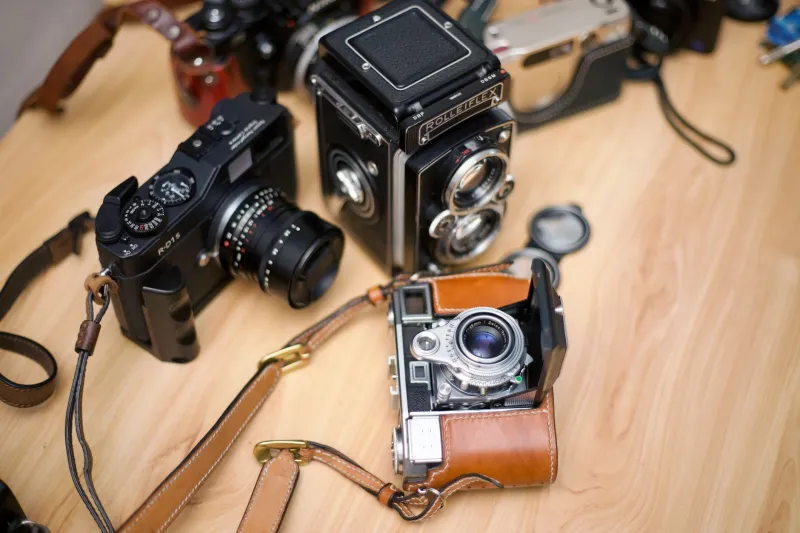
Park's early shorts were shot on a vintage prime set borrowed from a Boston rental house whose owner, a retired camera assistant, let the young filmmaker take the lenses home on weekends in exchange for sweeping the shop floor. The glass was sharp in the center and soft at the edges — technically a flaw. Park leaned into it. Faces in his early work sit dead center, framed by a gentle falloff that isolates performers like figures in a shadow box. Critics assumed it was a stylistic manifesto. It was, in a way. It just happened to begin as an optical defect he could not afford to fix.
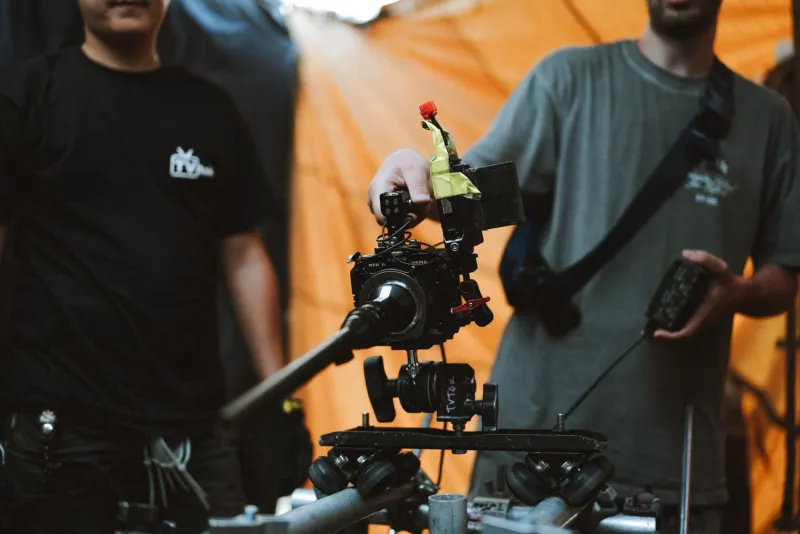
This is the pattern throughout Park's filmography: the workaround becomes the watermark. When he could not afford a dolly, he built blocking around static frames, letting actors move through the composition rather than moving the camera through the set. When he could not afford a generator, he shot at the blue hour and dawn — windows of fifteen to forty minutes that forced a ruthless efficiency into every shooting day. His crews learned to treat golden hour the way a Broadway understudy treats a first performance: no second takes on the light.
One Location, Endless Cinema
The Quiet Interval, Park's most programmed short, takes place entirely inside a decommissioned Detroit public library that the city allowed him to occupy for eleven days. A studio production would have dressed the space. Park instead let the building speak — water-stained ceilings, brass shelving, light through clerestory windows that no art department could replicate. His production designer's entire budget reportedly covered gaffer tape, a floor polisher, and a dozen secondhand chairs.
The lesson Park draws from that shoot, which he now teaches in masterclasses from Los Angeles to Savannah, is that a location with history does the production design for you. He scouts not for what a space could become, but for what it already is. His scouts carry a notebook rather than a camera: the goal is to understand a room's light at four different hours before anyone rigs a single fixture.
A Playbook for the Unfunded
For emerging filmmakers outside the studio system, Park's methods translate into a handful of repeatable disciplines:
- Write for what exists. Park drafts scripts around locations he has already secured, reversing the usual order. The page adapts to the world, not the reverse.
- Let one lens be the style. Rather than a kit, he commits to a single focal length per project. Uniformity reads as intention; variety reads as compromise.
- Schedule around free light. Shooting at civil twilight cuts the lighting budget to nearly nothing and imposes a discipline that many directors spend careers trying to develop.
- Cast locally, always. Non-actors from the shooting location cost less and carry an authenticity no casting session can manufacture.
- Keep the crew under ten. Park insists that a small crew preserves the intimacy of the frame — and the speed that small budgets demand.
Constraint as Auteurship
What separates Park from mere thrift is that he has never abandoned these methods, even as festival awards gave him access to real budgets. His recent work still favors single locations, natural light, and borrowed or long-lens packages. Colleagues speculate it is loyalty; Park's own explanation is simpler. "Every constraint I've ever had," he told a festival panel in Austin, "turned out to be a decision I was too poor to know I was making. Now I just make them on purpose."
For American independent filmmakers watching his career, the takeaway is quietly subversive: the signature look audiences and programmers respond to was never purchased. It was improvised, refined, and then claimed — proof that in Park's cinema, the budget is not the ceiling on the image. It is the image.