Choreographed Endurance: Decoding the Long Takes That Define Anton Park's Cinema
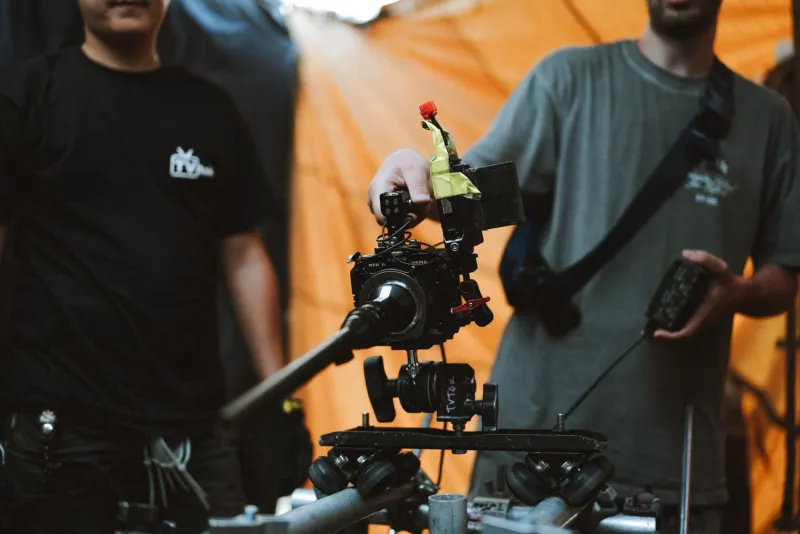
There is a moment, roughly four minutes into the opening sequence of Anton Park's most recent short, when the camera glides past a diner window in rural Ohio, catches a reflection of the crew it refuses to acknowledge, and continues on its way. Festival audiences have described the shot as hypnotic. Few realize that the sequence took nineteen takes over three days, that a Steadicam operator walked the same eleven-minute route until his feet blistered, and that what appears to be one continuous take is, in truth, two — stitched at a moment no reviewer has yet identified.
The Illusion of the Unbroken
Park's relationship with the long take is often misunderstood as purism. It is not. Behind the Scenes conversations with his regular collaborators reveal a director less interested in the absence of cuts than in the appearance of their absence. Hidden cuts — disguised in whip pans, doorframes, and the darkness of a character passing a hallway — allow Park to reset lighting, reposition actors, and spare his crew without sacrificing the illusion.
"The audience should feel duration," Park said during a post-screening Q&A in Chicago last spring. "They shouldn't feel trickery. Those are different things."
The distinction matters. A true single take, like the stairwell descent in Hint or the beach landing of Saving Private Ryan's spiritual descendants, imposes physical limits: battery life, film magazines, actor stamina. Park's approach borrows the grammar of the unbroken shot while treating its logistics as a solvable engineering problem.
Rehearsal as Architecture
The choreography begins weeks before a camera rolls. Park builds scale floor plans of every location — a habit picked up, he has said, from studying the blocking diagrams of classical Hollywood musicals. Actors learn their paths the way dancers learn counts. A barista in one sequence must pull an espresso at precisely the beat the camera rounds a corner; a dog in another scene required its own handler and three contingency plans.
Cinematographer Mara Ellison, Park's longtime collaborator, describes the process as "building a machine that can only fail gracefully." Every take is a full performance. There is no coverage to fall back on, no safety of the cut. When a background extra glances at the lens on take fourteen, the entire machine resets.
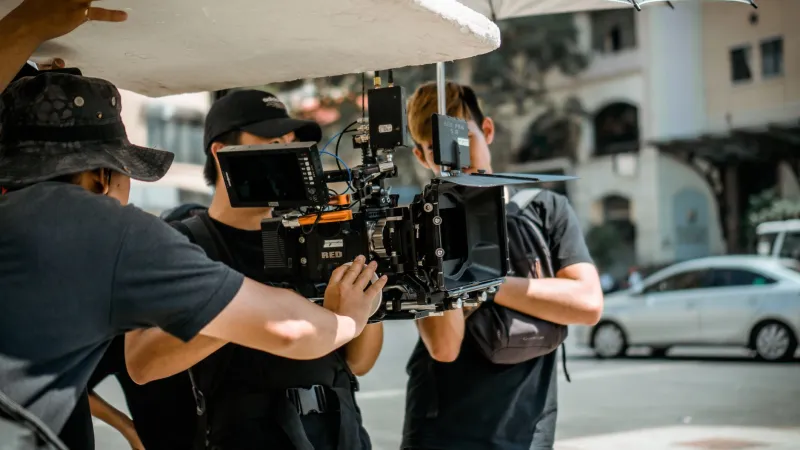
This is endurance filmmaking, and it exacts a cost. Crews on Park's shoots routinely log twelve-hour days for what amounts to ninety seconds of usable footage. Craft services become a matter of morale. The director reportedly ends every rehearsal day the same way: by walking the camera path himself, alone, in silence.
An American Lineage
Park's visual philosophy sits within a distinctly American tradition. Robert Altman's drifting ensemble shots, Brian De Palma's suspenseful prowls, and the modern showpieces of Children of Men and Birdman all argued the same thing: that time, when unedited, becomes an honest witness. The long take refuses the audience the mercy of escape. You cannot look away from what the camera does not.
What separates Park from his influences is scale. Working in shorts and independent features on modest budgets, he has treated the long take not as spectacle but as ethic. His shots rarely draw attention to their own difficulty. There are no virtuoso crane sweeps for their own sake. The camera behaves like a patient guest in the room.
Trust as a Formal Device
The streaming era has trained American viewers to consume images in fragments — a cut every two seconds, a rhythm engineered for second screens and autoplay. Against that current, Park's endurance shots read as almost confrontational. They ask something of the viewer: attention, patience, the willingness to sit inside a moment longer than comfort allows.
Some critics call this indulgent. Park's defenders call it trust — a wager that audiences, given the chance, still want to watch rather than merely scroll. The evidence of his festival reception suggests the wager pays off. When the final long take of his latest film ended at the Telluride-adjacent circuit screenings, the applause began before the credits.
In an industry optimizing for the skip button, Anton Park has built a career on the shot that cannot be skipped. That, more than any technique, may be his signature.