The Orchestra in the Empty Room: What It Costs to Compose for a Director Who May Never Press Play
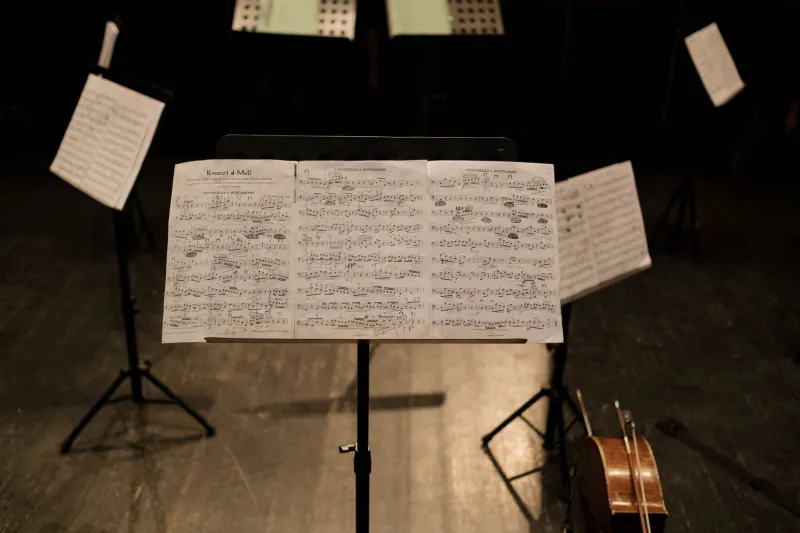
In a converted warehouse studio in Burbank last spring, a string section recorded eleven minutes of music for a film that would ultimately use forty seconds of it. The cue was titled "Hollow Creek, Reprise." It is beautiful — the session players reportedly applauded after the take. It does not appear anywhere in the finished film, nor in the credits, nor, technically, in the world beyond a hard drive in Anton Park's editorial suite.
This is not an anomaly. It is the arrangement.
The Deal Nobody Explains at the First Meeting
Park's working method has become something of a quiet legend among Los Angeles film composers. He commissions a full score — themes, variations, stems, the complete architecture of a musical language for the film. He pays union rates. He books real rooms with real players. And then, in the final weeks of post-production, he removes nearly all of it.
"The first time, I thought I'd failed," says one composer who asked not to be named, citing ongoing collaborations. "Then the mix came back and the scene played against just rain on a tin roof, and I understood. He wasn't rejecting my music. He was using it as a measuring stick."
Park's own explanation, offered during a rare panel appearance at the Sundance-supported Filmmaker Lab two years ago, was characteristically spare: "A score tells the audience what to feel. Silence asks them what they feel. I prefer the question."
Music as Scaffolding
The composers who work with Park describe a process that resembles writing a draft rather than a performance. The score functions as a temporary structure — a way of testing where emotion lives in a scene before the scaffolding is removed. Several describe Park playing scenes with full music, then with none, then asking a pointed question: does the scene still work?
If it does, the music goes. If it doesn't, the music stays — but usually in fragments: a single sustained cello note under a doorway, three piano chords at a farewell, a hint of the main theme so diluted it functions more like memory than melody.
The surviving fragments are often the ones the composers fought for least. "The cues I labored over, the ones with the counterpoint and the big builds — gone," says another frequent collaborator. "The eight bars I wrote in fifteen minutes because we needed a temp for the edit? That's in the movie."
The Cost of Writing for the Cutting Room
There is a genuine economic and psychological question buried in this process. Scoring sessions are expensive. Musicians in Los Angeles are working professionals whose livelihoods depend on recorded music actually being used. A method that treats full orchestral recordings as disposable raises uncomfortable questions — about waste, about the ethics of commissioning work one intends to discard, about whether extraordinary talent is being honored or merely consumed.
Park's defenders within the industry offer a counter-argument: the music is not wasted, it is load-bearing. The composers themselves admit that the scores shape their performances, their timing, their sense of where a scene breathes. Some describe writing the score as a form of private rehearsal for the film's emotional logic — a language Park speaks fluently and then chooses not to translate for the audience.
Whether that justifies the expense is a matter of perspective. What is not in dispute is that composers keep accepting the work. The reasons they give are revealing: Park listens completely. He attends every session. He knows their catalogs better than their agents do. And the fragments that survive — the half-minute of strings beneath a hospital window in his last short — tend to be among the most-discussed moments at festival Q&As.
The Silence Test
The most interesting artifact from these collaborations may be what Park's editors call "the silence test": a screening of the locked cut with no score at all, shown to a small room of collaborators. If a scene survives it, music is deemed a crutch. If a scene collapses, music returns — but sparingly, and almost never with a melody the audience could hum on the way out.
The result is a body of work in which the rare appearances of music carry the weight of an event. Audiences trained on wall-to-wall scoring experience these moments as gifts. Composers experience them as survivorship.
Is this a visionary discipline or an indulgent one? The honest answer is that it may be both, and that the distinction matters less to Park than to anyone writing about him. What the process produces is unmistakable: films in which a single note lands like a held breath, and rooms full of recorded music wait, unplayed, for a film that has already moved on without them.