The Living Room Test: Why Anton Park Screens His Films on the Worst TVs in America
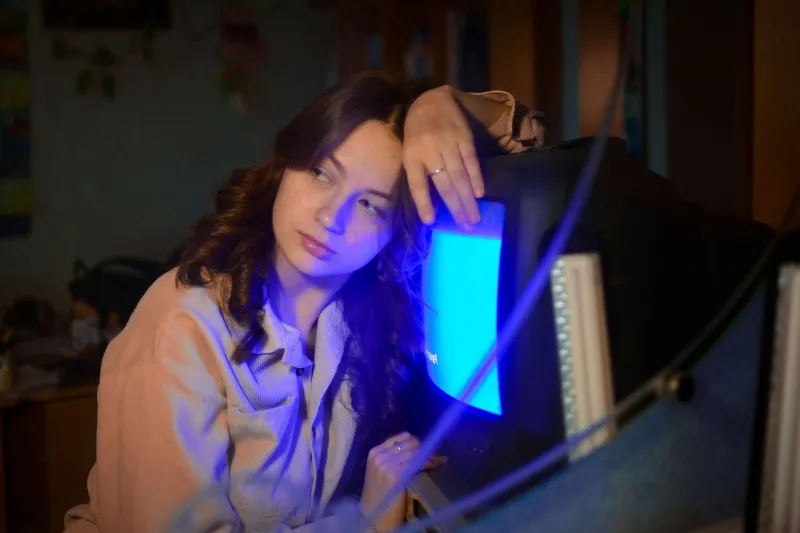
There is a version of Anton Park's latest short that exists nowhere on a festival screener. It lives on a battered USB drive that has traveled through four states, and it has been played — in full or in part — on a cracked iPhone, a hotel television in Reno, a projector in a Columbus basement, and a living room TV in suburban New Jersey whose color calibration was last touched sometime around 2011.
Park calls these screenings "the gauntlet." His collaborators call them something less printable. Either way, no film of his has reached picture lock without first surviving the worst playback conditions America can offer.
The Ritual
The process is deceptively simple. Once a cut reaches what most directors would consider near-final, Park exports it and carries it — physically, on drives, in a small padded case he has used since film school — to homes belonging to people he has often never met. Friends of friends. A cousin of a sound mixer. A retired schoolteacher in Missouri who once let the crew park a grip truck in her driveway.
He asks for nothing in advance: no adjusted lighting, no promises to watch attentively. The host watches the film the way they would watch anything else — with a phone face-up on the armrest, a dog on their lap, the kitchen light bleeding in from the next room.
"The festival calibrates everything for you," Park explained during a post-screening conversation in Los Angeles earlier this year. "A DCP on a calibrated projector in a dark room. That's one version of your film. But most people who ever see your work will see it on a television that came free with a furniture bundle, or a phone on a bus. If the film only works in the ideal room, I haven't finished it."
Why the Worst Screen Matters
Park's films are notoriously meticulous. His colorist works from hand-painted reference boards; his sound design is layered with a precision that borders on architectural. It would be reasonable to assume a director with that sensibility would guard it — that he would insist his work be seen as intended.
The gauntlet inverts that logic. Park's argument is that a film's design should be legible even when its details are not. If a scene's emotional turn depends on a subtle shift in the shadows, and that shift vanishes entirely on a low-contrast panel, does the scene still land? If a sound motif disappears into laptop speakers, does the silence that follows it still mean something?
"The grade is a suggestion," he says. "The story is the contract. The suggestion can fail on a bad screen. The contract can't."
His editor, who has worked with Park since his earliest shorts, describes the ritual as "humbling by design." Notes from living-room screenings have led to re-graded sequences, re-balanced dialogue, and — on at least one occasion — the removal of an entire visual effect that read as noise everywhere except a calibrated monitor.
What Changes After the Gauntlet
The adjustments Park makes are rarely dramatic. A key light raised half a stop. A line of dialogue that gets a second take in the mix because it was swallowed by ambient noise on one particular television. A color accent pushed slightly warmer so it registers even through the blue-heavy cast of a cheap LED panel.
What never changes, he insists, is the intent. The gauntlet is not about making the film louder or flatter. It is about making sure the film's spine — its rhythm, its logic, its emotional causality — survives translation into every room it will ever enter.
"There's a vanity trap in independent film," he notes. "You polish for the room where the critics sit. But your film will live mostly in rooms where nobody is sitting quietly. Design for that person. They're the majority of your audience, and they didn't ask to be."
What Indie Filmmakers Can Take From It
Park is quick to say the ritual requires no budget — which is precisely the point. His practical framework, distilled from years of these screenings:
- Test on at least three device classes: a laptop, a mid-range television, and a phone. Note where the film loses clarity and where it holds.
- Watch with distractions present. If a scene can't survive a passing siren or a scrolling thumb, ask whether its mechanics are too delicate.
- Listen on the worst speakers available. Dialogue intelligibility, not fidelity, is the benchmark.
- Watch strangers, not collaborators. Collaborators watch for craft. Strangers watch for story. Only one of those groups is optional.
- Export a "gauntlet cut" — a throwaway file you're emotionally prepared to have fail, so the notes feel like data rather than judgment.
The Philosophy Underneath
For all its practicality, the living room test rests on a belief about what cinema is. Park's films are built for attention — long takes, deliberate silences, frames that reward patience. It would be easy to read his gauntlet as a concession, a director sanding down his ambitions for the lowest common denominator.
He rejects that framing. The ritual, he argues, is not surrender but respect: for the viewer on the couch in New Jersey, for the festival programmer watching on a laptop at midnight before a deadline, for the audience member whose only screen is the one in their pocket.
"A film that demands perfect conditions is a film with an excuse built in," Park says. "I'd rather remove the excuse. Then, whatever happens on that screen — good or bad — it's mine."
The next time one of his shorts premieres, in a darkened theater with a calibrated projector and an attentive crowd, know that it has already been somewhere harder: a living room where nobody was trying, on a television nobody calibrated, watched by someone who owed him nothing. It passed there first.